Author: Joe Pluta

  • Saturn Booksellers (Gaylord, MI) and Leelanau Books (Leland, MI)


    A taste of Michigan summer...
    A taste of Michigan summer…


    Two More Independent Michigan Bookstores now have my books in stock. Saturn Booksellers in Gaylord and Leelanau Books in Leland are now carrying both “21 Yesterdays” and “Two Peninsulas”. All of my books can be ordered through any bookstore but several independent bookstores have them on their shelves.

  • Membership in Michigan Writers


    Cover_Small_Town_Thumb                       I am very happy to have been accepted into a well respected literary group.

    Based in Traverse City, Michigan Writers provides opportunities for networking, publication, and education to writers who either live in or are from the Great Lakes state. It sponsors workshops, encourages establishment of writing groups, and publishes a journal of fiction and poetry entitled the Dunes Review, acknowledged as Northern Michigan’s premier literary journal.

  • #3 Best Selling Friesen Press Book Worldwide!!!

    Cover_Human_Progress_Small”Human Progress Amid Resistance to Change” is currently (August 2013) the #3 Best Selling Friesen Press Book worldwide. For an excerpt, click on the Google Books link to the right. For comments and a brief description, go back to the home page, click on “Published Works”, then on “Economics Books”.

  • Review of “21 Yesterdays”

    In all of James Michener’s great works, but especially in Hawaii and Poland, he totally immersed himself in the history of his subject before he began writing about it. He then inserted fictional characters whose lives were influenced by major events and real characters of the period. The result was always a warm and discerning account of what life would have been like for “ordinary people” caught in the crossfire of dramatic historical circumstances.

    In his stories of 20th century Michigan, Joseph Pluta is a modern day Michener. 21 Yesterdays is the 4th of his classic works of historical fiction set in Michigan and his 3rd medley of short stories. This collection is by far his best to date. His characters are powerful, his accounts are touching, his wit is sharp, his sense of humor is always evident, and his handicraft is historically accurate.

    Pluta is equally comfortable writing about small town Three Oaks in 1903, upper peninsula culture in the late 1950s, and southern Michigan differences of political opinion at the close of the ’90s. His professional training as an economic historian and his literary talents have enabled him to mix fact and fiction while being keenly aware of the important dividing line between the two. Here is a writer who has lived in Michigan during his formative twenty years, spent time in all of the communities he incorporates into his writing, and knows the intricacies of what it means to be a Michigander.

    The range of topics covered in 21 Yesterdays is considerable. Pluta’s description of each is thorough. There is youthful indiscretion, family warmth, impropriety among religious clergy, dishonesty in the conduct of universities, corporate corruption, romance, and psychological trauma. All tales contained within this group of short stories have individual merit. In the eyes of this reviewer, four stand out.

    “His Name Was Dad” is a poignant tribute to a (his?) father who lived his own troubled life in hopes that his son could avoid similar hardships. The story is unusual yet realistic, timely yet timeless, distressful yet optimistic. Equally insightful is “Jeri Christopher”, an account of a woman who has raised her now teenage son on a limited income while the young man’s economically successful father is unaware that he exists. When the parents eventually reconnect, the outcome is both surprising and educational.

    “’03 Three Oaks”, set at the beginning of the 20th century, documents the success of a flying machine in Michigan before the 1903 achievement of the Wright Brothers. The story is based on historical fact, the visit to this small town of a U. S. president is well known, and the lives of two brilliant women in this setting are both perceptive and believable.

    By far, the best story is “The Iowa Trip”, where three young men happen upon Buddy Holly, Ritchie Valens, and J. P. Richardson just prior to their tragic deaths in a 1959 plane crash. In this account, the author is fully aware of all events leading up to that last concert even though the existing literature has often contained contradictions and inaccurate information. Read this story and you will feel that you were at the Surf Ballroom in Clear Lake that frigid February night.

    Joseph Pluta is arguably the best writer of historical fiction based on the Michigan experience. His prose flows beautifully, his descriptions entertain, his plots grab the reader’s attention, and the lessons he offers are worthwhile. To date, this book is his ultimate achievement. His earlier work on Michigan is also worth reading. His future fiction is the subject of much anticipation among his many satisfied readers.


    by Otis Sheridan

    Weekly Gazette

    June 20, 2013


    Cover_21_Yesterdays_Small

  • Pluta’s Leap from the Dismal Science to the Joyful Arts

    Cover_Best_Six_YearsHis credentials as a scholar and accomplished teacher well established, Dr. Joseph Pluta, a Professor of Economics at St. Edward’s University, turned a few years ago toward new and creative endeavors. In memoir and in autobiographical fiction, he has recorded his early years growing up in the small community of New Buffalo, Michigan, and tried to immortalize some of the characters that he has gotten to know over the years.

    Joe (as friends and colleagues call him) was born in Chicago, Illinois, but moved as an infant with his family to a farm in southwestern Michigan where he lived until he went off to college. Being an only child, he found work to be an excellent way to interact with people other than his parents. Growing up, he worked at a root beer stand and eventually managed a restaurant at age 16. After that, he worked at a pharmacy, which was the center of life in the small town. During that time, Joe watched, learned, and mentally recorded events that would eventually breathe life into his stories.

    When Joe left home for school, he went to Notre Dame. He says his decision to major in economics was born of a lack of professional role models growing up. In his tiny hometown, there was a doctor, a lawyer, and a pharmacist. He knew he didn’t want to be a pharmacist because he had already filled prescriptions and he didn’t want to be a doctor because he couldn’t stand the sight of blood. Therefore, he started his sophomore year as an economics major with the intent to go to law school.

    After taking courses in business law and in labor law, young Mr. Pluta began to realize that the legal profession was not his calling in life. The reading material was a bit too dry. He went on to get his master’s degree in economics at Notre Dame and, at age 20, was admitted into the Ph.D. program. However, his professors there advised him against getting all three of his degrees at the same university because going to a different school would expose him to new and different ideas. After being accepted into eleven different doctoral programs, Pluta decided that he liked the course of study at the University of Texas because it focused on applied economics rather than theoretical economics.

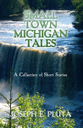
    At St. Edward’s University, Pluta has had a successful career as a writer of economics books and professional journal articles. He recently shifted, however, from the scholarly to the personal. Since 2010, he has published a childhood memoir, called The Best Six Years of Any Life, as well as three collections of autobiographical short stories: Small Town Michigan Tales ,  Two Peninsulas , and 21 Yesterdays. When asked why, after publishing books in economics, he pursued creative writing, he explained that he enjoyed the liberty that fiction allowed. His short stories are based on some personal experiences and different characters he has known, but he feels that he took enough creative license for the works to qualify as fiction. The memoir is based on what he admits was a lifetime of research into his very early childhood.

    When asked what he has learned as an economist, teacher, memoirist, and fiction writer, Pluta replied, “I think it’s important to have a broad-based education in large part because you change your mind, or you maybe even have to change careers. So if you’re totally trained to do only one thing, and the job market in that area dries up, you may not be as well equipped to do something else if you don’t have a broad education.”

    Joseph Pluta’s leap from economics to autobiography and from textbooks to fictional stories, clearly illustrates that he is equipped with a broad and versatile education. His memoir and short story collections are available from Friesen Press.

    by Daniel Hamilton

    (The above article was published in the Winter 2013 issue of New Literati magazine.)

  • International Book Sales on the Rise!

    Homepage_Fiction


    Sales of my short story collections during the last three months have been increasing rapidly in England, Germany, and India. Within the U. S., the states where most books have recently been sold are Michigan and Texas.

  • Distinguished Alumni Achievement Award

    St. Edward’s University recently presented its 2013 Distinguished Alumni Achievement Award to Katharine Baragona, Class of ’87. The following appeared in the Spring 2013 issue of St. Edward’s University Magazine:

    Whether she’s building financially sustainable infrastructures in developing countries or rebuilding her parents’ home after a hurricane, Kate Baragona commits. After graduating from St. Edward’s, she went on to earn a law degree and was one of the first five American lawyers to dual qualify as a U.K. Solicitor with the Law Society of England and Wales. Baragona has worked at law firms on both sides of the Atlantic and currently works for the World Bank.


    Were there any people at St. Edward’s who influenced your career path?

    At St. Edward’s, I was fortunate to have Jim Koch, Joe Pluta and Ed Shirley as teachers. Their passion and expertise built the foundation of my professional pursuits. Each of them is intellectually unrestrained. They know the principles of their areas of expertise but have continued to challenge accepted “truths” in pursuit of deeper knowledge and understanding. It was this practice of the art of curiosity that spoke to me and inspired me to go find answers.

  • My Books Are Now Available at Another Chicago Bookstore!

    My Books Are Now Available at Another Chicago Bookstore!

    Another Bookstore in Chicago now has my books in stock. Information is listed below:

    The Bookie’s Paperbacks & More,

    2419 W 103rd St.,

    Chicago, IL 60655,

    773-239-1110

    bookiespaperbacks.com

  • Friesen Press Best Selling Book!

    Friesen Press Best Selling Book!

    Cover_Human_Progress_Thumb “Human Progress Amid Resistance to Change” was selected as one of the Friesen Press Best Selling Books of December 2012. The book challenges a number of concepts developed and currently used by mainstream economists. For an excerpt, click on the Google Books link below and to the right.

  • New Collection of Short Stories

    New Collection of Short Stories

    21 Yesterdays Cover

    My latest book of short stories, 21 YESTERDAYS, was published in early January!! It is available from the publisher (Friesen Press), on Amazon, or through local bookstores. Go to the Friesen Press link for a full description or to the Google Books link for a sample preview and table of contents.